This glossary will be used to practice and memorize keywords.
Air-entrained concrete
Noun
Air entrained concrete contains microscopic air bubbles that help alleviate internal pressure on the concrete by providing small pockets for water to expand into when exposed to freeze-thaw conditions.
Example: The air entrained concrete provides scaling resistance and a prolonged service life.
es: Hormigón arrastrado por aire.
Architectural concrete
Noun
Architectural concrete is concrete that will be permanently exposed to view and therefore requires special care in selection of the concrete materials, forming, placing, and finishing to obtain the desired architectural appearance.
Example: Architectural concrete indicates concrete that results in both an aesthetic finish and structural ability.
es: Hormigón Arquitectónico.
Asphalt concrete
Noun
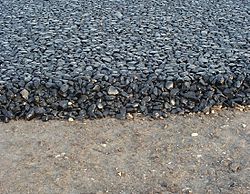
Asphalt Concrete is a composite material commonly used in construction of roads, highways, airports, parking lots, and many other types of pavement.
Example: Asphalt concrete generates less roadway noise than a Portland cement concrete surface, and is typically less noisy than chip seal surfaces.
es: Concreto asfáltico.
Axis
Noun
An axis is a line connecting two points in space, about which forms can be arranged in an asymmetrical or symmetrical, balanced manner.
Example: It is an imaginary line that can denote structure, procession, direction, views, line of rotation and so on.
es: Eje.
Backup wall
Noun
Common interior walls (backup walls) are cold-formed steel framed walls with water-resistant sheathing and concrete masonry.
Example: The backup walls, they can be vertically and horizontally installed with nearly any type of exterior rainscreen system.
es: Muro de respaldo
Brick courses
Noun
A 'course' is a measurement referring to the dimensions of the brick AND mortar when they have been sandwiched together. One brick and the mortar together is equal to one 'course'.
Example: A course is a layer of the same unit running horizontally in a wall.
es: Cursos de ladrillo.
Brick veneer
Noun
Is a method of construction where a property of either a wooden or steel frame is concealed with a single layer of bricks as the exterior layer.
Example: Using Brick Veneer for Interior
es: Chapa de ladrillo
Cellular concrete
Noun
Cellular concrete is a lightweight cement-based material, containing many gas bubbles evenly distributed in the volume, produced by blending and maturing of a mixture of cement, filler, water, agent generating cells.
Example: The cellular concrete is the self-compacting property wherein no compaction is required and it steadily flows out of a pump outlet to fill the mould.
es: Hormigón celular
Colored concrete
Noun
Colored concrete, also known as decorative concrete, allows traditional grey concrete to be stained and dyed different colors.
Example: Another benefit of integrally colored concrete is its composition. Since the color goes all the way through, it can't wear down, chip away or fade.
es: Hormigón con color.
Concrete block
Noun
Concrete block is primarily used as a building material in the construction of walls. It is sometimes called a concrete masonry unit (CMU).
Example: Concrete blocks are an alternative construction material to brickwork with advantages and disadvantages.
es: Bloque de concreto
Cured concrete
Noun
Is defined as providing adequate moisture, temperature, and time to allow the concrete to achieve the desired properties for its intended use.
Example: Drying of concrete is defined as providing the proper conditions to allow the concrete to achieve a moisture condition appropriate for its intended use.
es: Hormigón curado
Dovetail insert
Noun
The dovetail insert receives a variety of different anchors and has been used in constructions.
Example: Dovetail grooving inserts are used to machine O-ring dovetail grooves with 66° undercut angles.
es: Inserto de cola de milano.
Edge
The outside limit of an object, area, or surface; a place or part farthest away from the center of something.
Example: The line where an object or area begins or ends.
es: Borde
Exposed concrete
noun
Exposed concrete refers to concrete whose surface is a visible part of the architectural and interior design of the building.
Example: The monument consists of an exposed concrete slab symbolizing the expansion of construction.
es: Concreto expuesto.
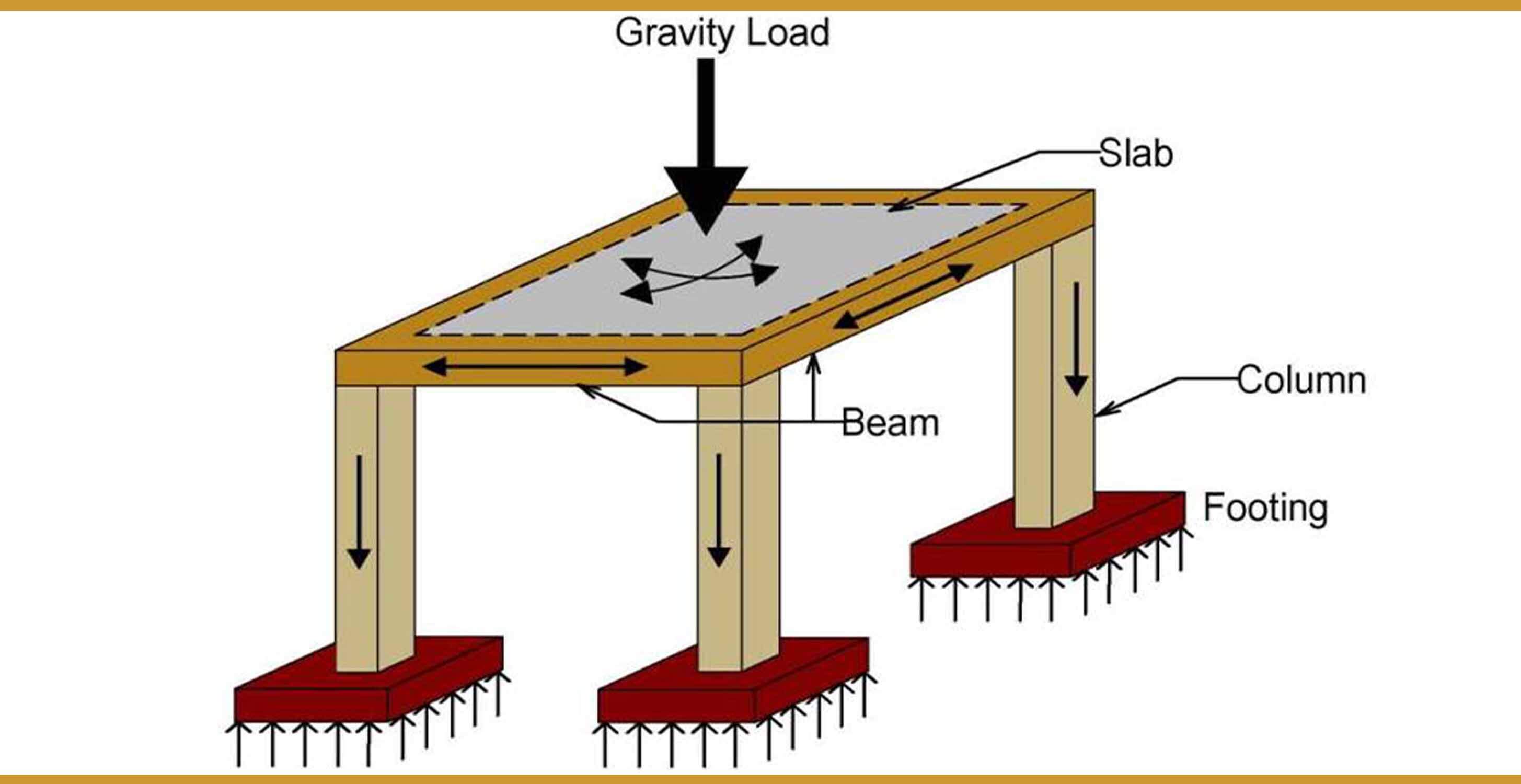
Gravity load
Noun
Gravity loads are the vertical forces that act on a structure.
Example: he weight of the structure, human occupancy and snow are all types of loads that needs to have a complete load path to the ground.
es: Carga de gravedad
Green concrete
Noun
Most often refers to concrete that has not gone through the curing process by which it becomes a strong, hardened building material used throughout the world.
Example: Green concrete can also mean concrete that is made from recycled stone or has other eco-friendly materials or properties.
es: Hormigón verde.
Grid
Noun
The grid is created by establishing a regular pattern of points that define intersections. The grid is established through constant reference points and lines located in space and, although they differ in size, shape, they can share a common relationship.
Example: On the floor of the streets it sometimes generates a system of ordering where we have a grid, since either in a set of vertical or horizontal lines.
es: Trama
Hanging off (of)
verb
To be suspended from something: The ornaments hang off the chandelier.
Example: Puente Vlaardingen
es: Colgado de
Horizontal mortar joints
Noun
The struck mortar joint is employed for horizontal joints.
Example: Brick houses.
es: Juntas de mortero horizontales.
Insulating concrete
Noun
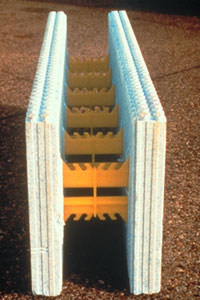
Insulating concrete forms, or ICFs, are forms used to hold fresh concrete that remain in place permanently to provide insulation for the structure they enclose.
Example: They are used in low-rise buildings, with real estate uses ranging from residential to commercial and industrial.
es: Hormigón aislante.
Ladder-type systems
Noun
A ladder is a vertical or inclined set of rungs or steps. There are two types: rigid ladders that are self-supporting or that may be leaned against a vertical surface such as a wall, and rollable ladders, such as those made of rope or aluminium, that may be hung from the top.
Example: Ladder-type systems are the frame, used for ascent and descent.
es: Sistema de escaleras
Landmark
Noun
an object or feature of a landscape or town that is easily seen and recognized from a distance, especially one that enables someone to establish their location.
Sometimes called 'brick ties'; They are used to join the two leaves of a cavity wall together, allowing the two parts to act as a homogeneous unit.
Example: Hidden from view after construction, wall ties play a vital role in ensuring the stability of a building.
es: Lazos de albañilería.
Metal channel.
Noun
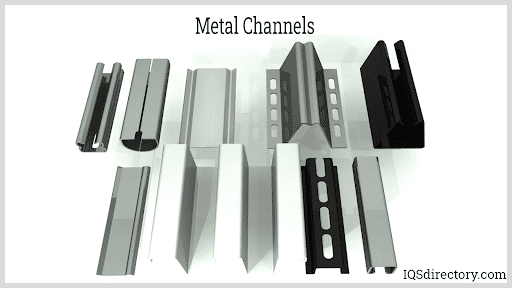
Is a roll formed metal strip that has been shaped into a tube or a U, J, or C shape for industrial and manufacturing use.
Example: Metal channels, are used to build walls for garages, warehouses, workshops, or metal out buildings.
es: Canal de metal
Metal decking
Noun
In the construction industry, the metal decking are all forms of the profiled steel sheeting commonly used together with concrete to create a composite floor system or as a structural element to support a built-up roof system.
Example: Is used as a structural feature in roof construction. When specified as metal roof decking it is used to support insulating membranes.
es: Cubierta metálica
Metal framing
Noun
Is a construction system that uses cold-formed and galvanized steel frames instead of wooden or aluminum beams as structural elements. Metal framing studs are used to support a non-load-bearing wall.
Example: Metal framing can be structural if it is engineered.
es: Enmarcado de metal
Metal grating
Noun
Metal grating is a metal product produced by perforating metal sheets or joining bars of metal to form a grid.
Example: Expanded metal grating is made by creating slits in a metal sheet, and then stretching (expanding) the sheet, resulting in a diamond pattern.
es: Rejilla de metal
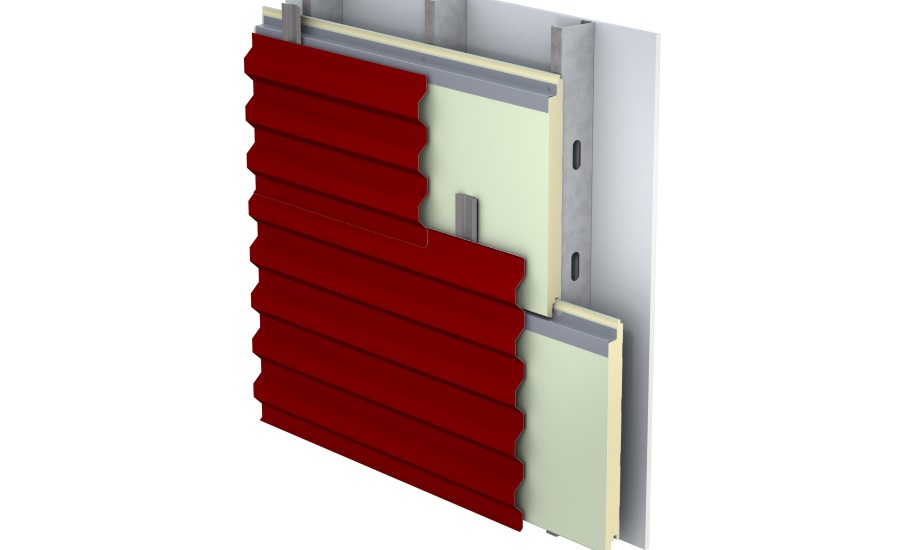
Metal panel
Noun
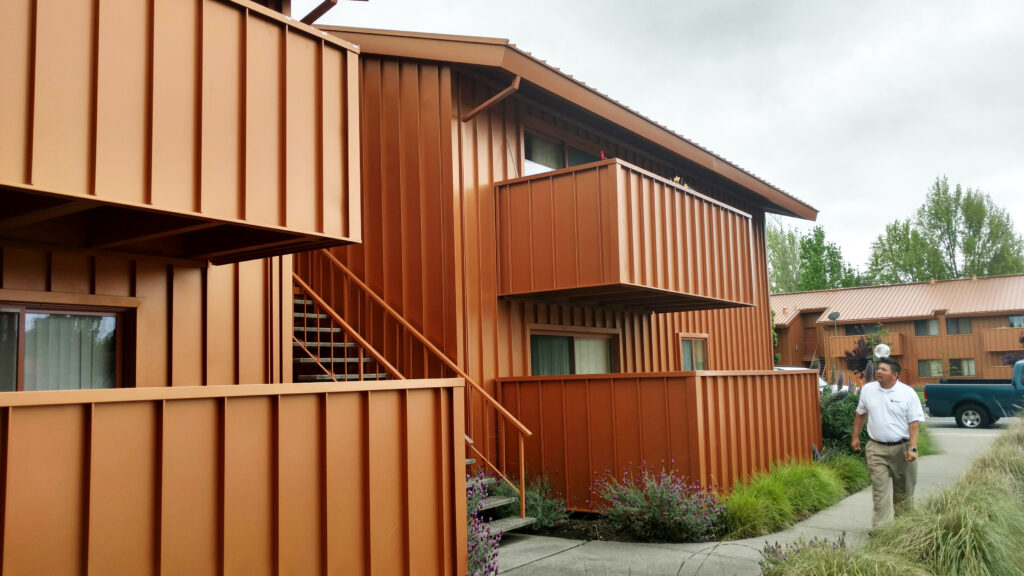
These panels are formed by joining two thick metal skins (predominantly aluminum but can be made of steel, zinc, copper, stainless steel or titanium) to a core that is made of polyethylene or other fire-retardant plastic material, and bonded under a specific temperature, pressure, and tension. The end product is a metal/plastic composite with greater benefits than just using a solid metal panel of the same thickness.
Example: It is used in a wide number of settings including commercial, residential and industrial.
es: Panel metálico
Metal rod
Noun
Metal rods are specially formed pieces of metal and alloy that are shaped into a rod-like aesthetic hence the name. Metal rods are commonly used to give added support to a range of applications.
Example: Metal rods are commonly used in masonry structures.
es: Varilla de metal
Metal roofing
Noun
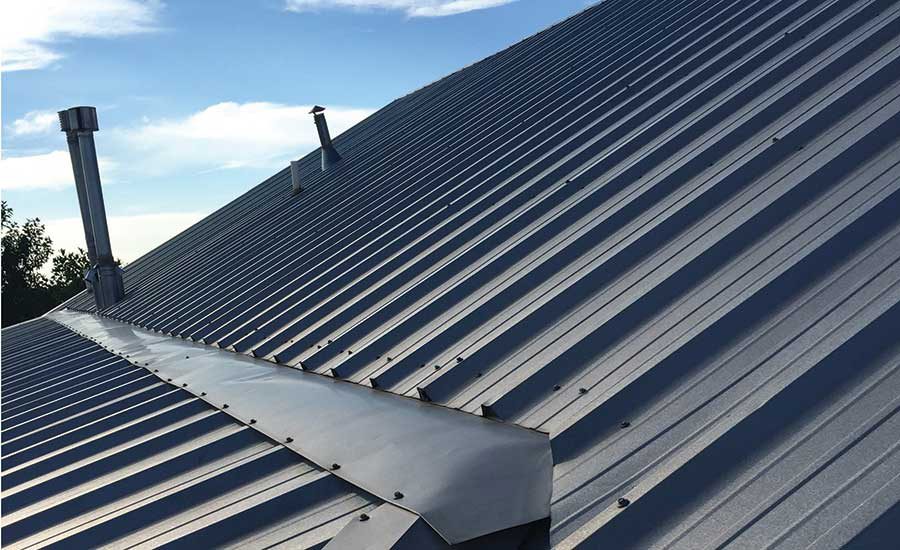
A metal roof is simply a roofing system made using metal pieces, tiles, or panels. A metal roof is a part of the roofing envelope which is the physical separator between the inside and outside of the building and is designed to provide resistance to air, water, heat and sound.
Example: The metal roof also contributes to structural support and is a significant contributor to the overall aesthetic appearance of a building.
es: Techo de metal
Metal stud
Noun
Structural metal stud framing refers to the construction of walls and planes using cold-formed steel components.
Example: Metal studs provide disaster-resistance and are not prone to termite or mold damage, like wood studs.
es: Pernos de metal
Metal tubing
Noun
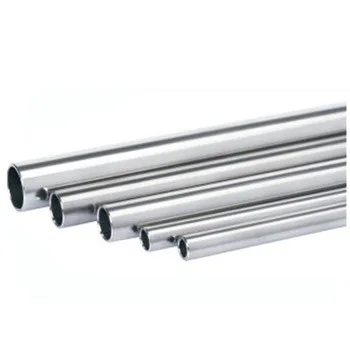
Metal tube (tubing) is made of metallic elements or alloys and is designed for specific industrial applications.
Example: Compared to other types of tubing, metal tube is stronger and most robust, making it better suited for structural applications and high-pressure fluid flow.
es: Tubo metálico
Milestone
Noun
The milestones are recognized by everyone at a site, where they aren´t penetrated.
Example: A place and/or being a place with an important symbolic load.
es: Hito
Multi-story
Adjective
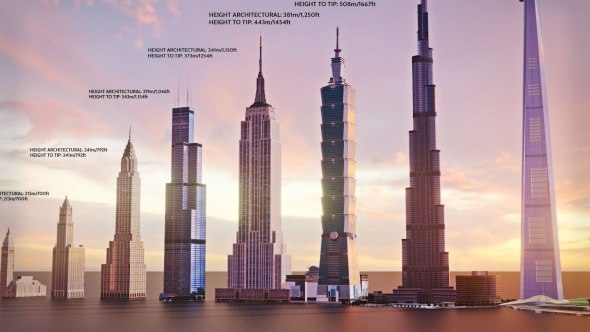
A multi-storey building is a building that has multiple storeys, and typically contains vertical circulation in the form of ramps, stairs and lifts.
Example: City buildings.
es: De varios pisos.
Node
Noun
The nodes are meeting points, unions of paths, crossroads, fundamental for move around the city or space.
Example: The intersections of two or more such arteries would clearly become major nodes of traffic and urban activity
es: Nodo.
Porous concrete
Noun
It's a type of pavement with a porous surface that is made up of concrete, it is also considered as green pavement, it allows water to run through it instead of accumulating or leaving it.
Example: The driveway of a house
es: Hormigón poroso
Precast concrete
Noun
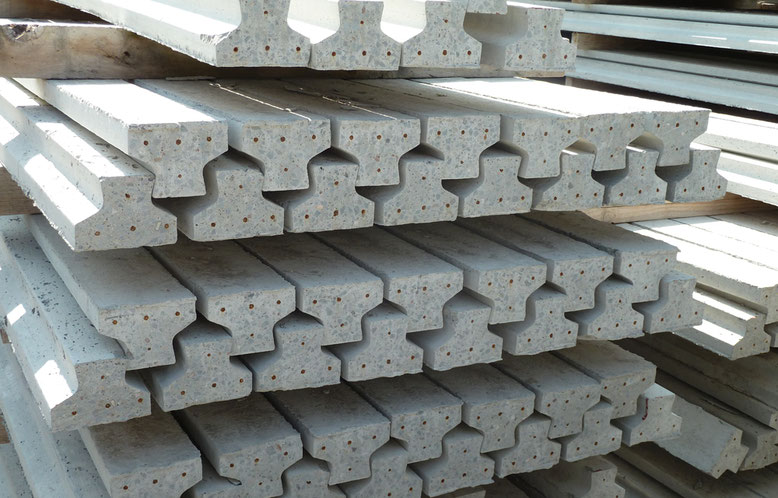
Precast concrete is simply concrete that is cast somewhere other than where it will be used. Most precast products are cast in a factory using a wet-cast method, but others are cast on site—such as tilt-up panels.
Example: Floor and roof planks, tees and double-tees
es: Concreto prefabricado
Prestressed concrete
Noun
Prestressed concrete is a form of concrete used in construction. It is substantially "prestressed" (compressed) during production, in a manner that strengthens it against tensile forces which will exist when in service.
Example: Prestressed concrete is used particularly for bridge.
es: Hormigón pretensado
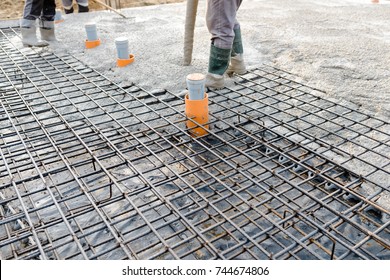
Reinforced concrete
Noun
Reinforced concrete, in which steel is embedded in such a manner that the two materials act together in resisting forces.
Example: The reinforcing steel—rods, bars, or mesh—absorbs the tensile, shear, and sometimes the compressive stresses in a concrete structure.
es: Concreto reforzado.
Relief angle
Noun
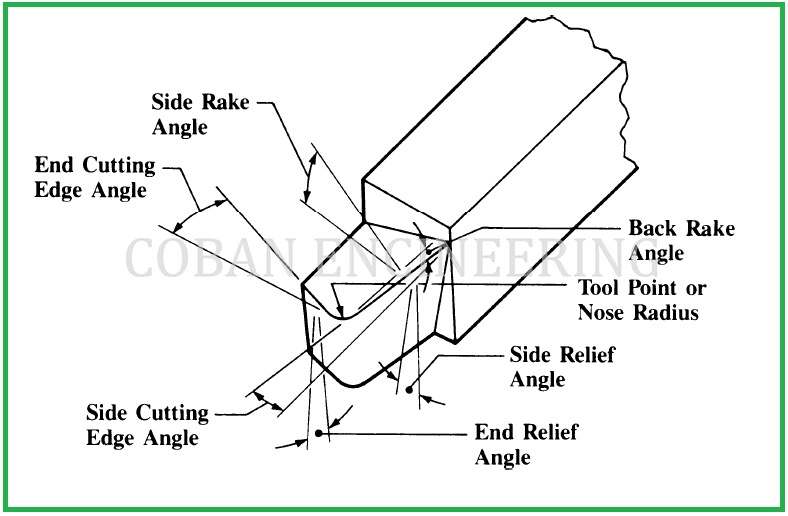
Is the angle that the edge of the tool nearest the workpiece makes with the workpiece. If the relief angle is too small the side of the tool will not clear the work and will rub.
Example: Small relief angles are necessary to give strength to the cutting edge when machining hard and strong materials
es: Ángulo de alivio
Routes and circulation
Nouns
In particular, circulation routes are the pathways people take through and around buildings or urban places.
Example: Circulation is often thought of as the "space between the spaces".
es: Trayectos y circulación.
Slab
Noun
Is a flat, monolithic piece of stone or concrete used for a floor or roof.
Example: Slab in structure
es: Losa
Steel angle
Noun
Steel angles are a common type of steel shape used in construction, machine-building and many other areas. Steel angles are hot rolled, and are most often structural.
Example: A steel angle is an L-shaped profile manufactured by section rolling mills or bending machines.
es: Ángulo de acero
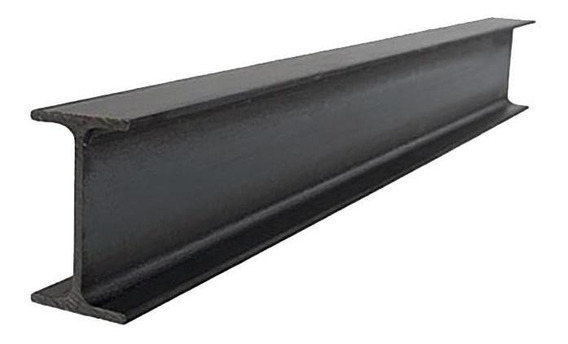
Steel beam
Noun
A steel beam is a structural steel product that is made to support heavy loads. Steel beams are hot rolled, horizontal steel structural framing members.
Example: Steel beams come in different sizes and types, hence their different applications in the construction of structures and buildings.
es: Vigas de acero.
Steel column
Noun
A steel column is a vertical structure member used in construction to provide essential support. They may carry loads in compression, or they may transfer loads from things like beams, ceilings, floor slabs or roof slabs to floors or foundations.
Example: Steel columns may also carry bending moments near cross-section axes.
es: Columna de acero.
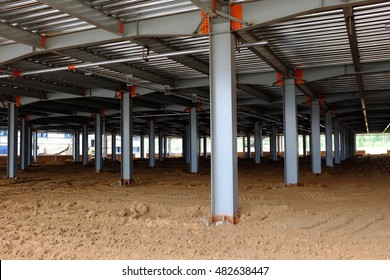
Steel framing
Noun
Refers to building frame systems where the vertical and horizontal structural elements are formed by a system of structural steel beams and columns.
Example: Are to support the floors, roof and walls of a building which are all attached to the frame. The development of this technique made the construction of the skyscraper possible.
es: Estructura de metal
Steel joist
Noun
Joists are custom-made structural steel components used to support the floors or roof of a building.
Example: The use of a system of steel joists and steel deck is a solution of choice resulting in significant savings.
es: Viguetas.
Steel member
Noun
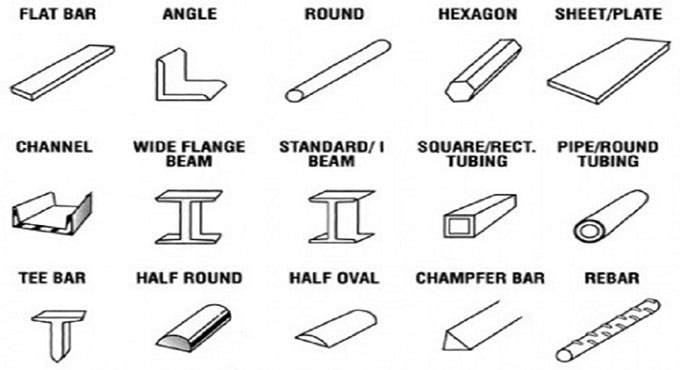
The three most common types of structural members are the W-shape (wide flange), the S-shape (American Standard I-beam), and the C-shape (American Standard channel). These three types are identified by the nominal depth, in inches, along the web and the weight per foot of length, in pounds.
Example: Steel members are any part of a primary structural system. Beams, columns, girts, joists, etc.
es: Miembros de acero
Steel plate
Noun
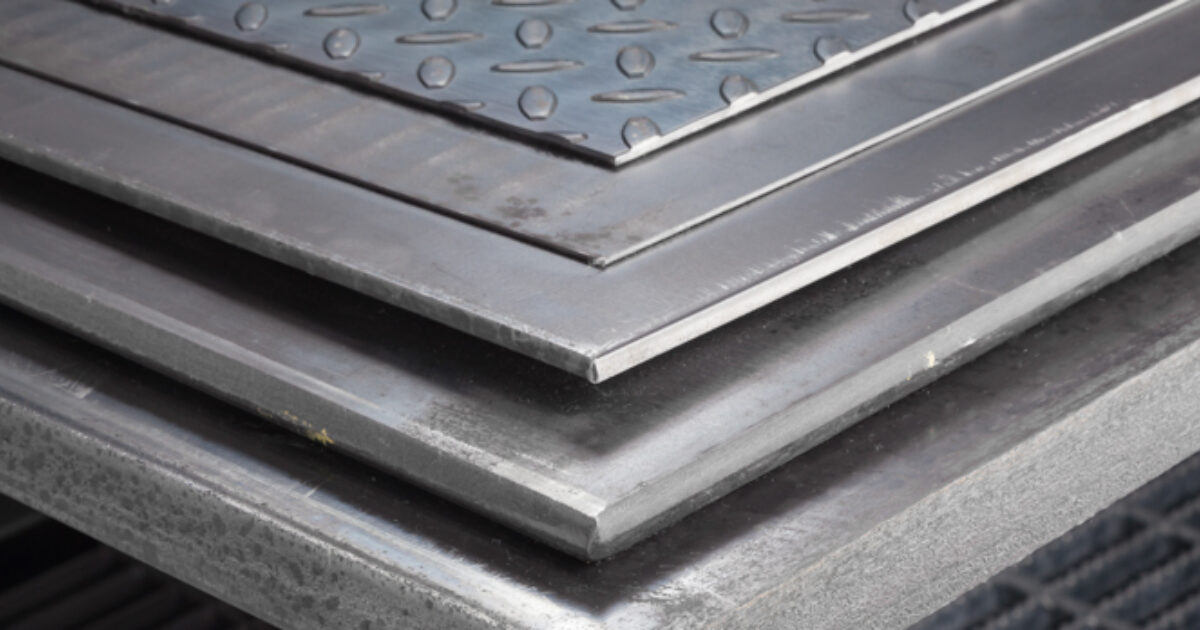
Steel Plate, or structural steel is simply steel sheet material that can be customarily cut and welded to develop a more elaborate product.
Example: Steel plate is often structural.
es: Placa de acero.
Steel reinforcement
Noun
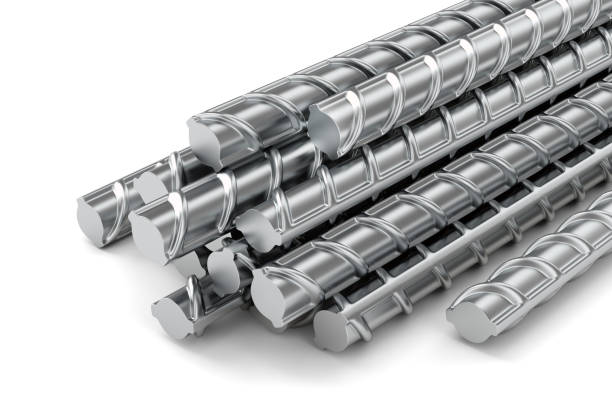
Steel reinforcement are steel bars that are provided in combination with plain cement concrete to make it reinforced concrete.
Example: These structures form steel reinforced cement concrete structure (R.C.C).
es: Refuerzo de acero.
Steel reinforcing
Noun
Steel reinforcement are steel bars that are provided in combination with plain cement concrete to make it reinforced concrete.
Example: These structures form steel reinforced cement concrete structure (R.C.C).
es: Refuerzo de acero
Steel rod
Noun
Steel rods, placed in the lowest portion of a concrete slab prevent that slab from cracking when subjected to that tensile bending force.
Example: Reinforcing bars are also a type of metal rods that are used to give strength or internally sustain the concrete and masonry structures.
es: Varillas de metal
Steel sections
Noun
Steel sections are very necessary for steel fabrication. Designers, architects and engineers choose different sections for their aesthetics and structural qualities – their choices determined by size, weight, and profile.
Example: Steel is extremely versatile and can be moulded to many different shapes.
es: Secciones de acero
Supports
Noun
Thing that receives the weight of another and prevents it from wobbling or falling.
Example: A structure supporting or containing something. frame, skeletal frame, skeleton, underframe.
es: Apoyos
Tie (something) back to
Noun
To bind or fasten something back out of the way
Example: Tie scaffolding.
es: Atar algo a
Urban legibility
Noun
Characteristics of a space or territory that alludes to the faculty of its reading, without visual obstruction.
Example: This example is a mental map of legibility analysis